MEAL & Impact Management Advisory & Consulting

Designing impact.
Building evidence.
Improving decisions.

Salkan helps organizations turn impact ambitions into clear strategies, operational practices and better decisions.

Impact requires more than good intentions.

Strategy → Evidence → Learning → Decisions

Organizations need to understand the change they want to create, build practical ways to observe it, and develop the capacity to learn and adapt.

Salkan brings together expertise in MEAL, impact management, organizational learning and innovation to make that possible.

Two fields. One continuous path from ambition to action.

01

Monitoring, Evaluation, Accountability and Learning
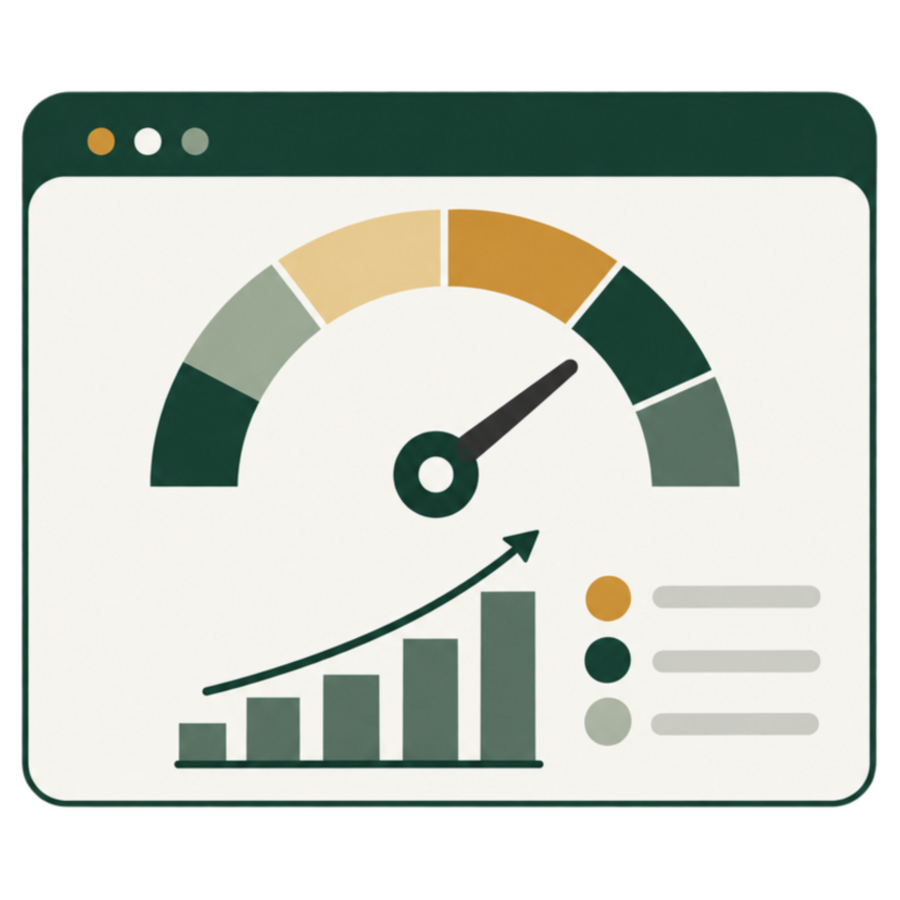
Monitoring dashboard illustrating progress and evidence

Understand what is changing, learn from evidence and experience, and use those insights to improve projects and decisions.

  • Design projects for impactClarify the change you want to contribute to, how your work can make a difference, and what needs to be in place to understand progress from the start.
  • Understand progress & resultsFollow what is happening, understand what is working and what is not, and generate useful evidence to support decisions and demonstrate results.
  • Learn & improveTurn evidence and experience into practical knowledge that teams can share, retain and use to improve their work over time.
  • Use data & digital tools wellMake information easier to collect, manage and use, with tools and processes that are practical, responsible and suited to your needs.
02

Impact Strategy & Management

Impact compass connecting people, planet and sustainable growth

Make impact a practical part of strategy and management, from defining what matters to adapting decisions.

01

Understand impact

Build a shared understanding of the change you want to contribute to, who is affected, what matters to them, and where unintended effects may arise.

02

Design for impact

Turn that understanding into a clear direction: what to prioritise, how your work is expected to contribute, and how you will know whether you are moving in the right direction.

03

Manage impact

Use evidence as part of everyday management to follow progress, question assumptions and make informed choices about what to continue, change or strengthen.

04

Manage risks & adapt

Identify what could undermine results or create unwanted effects, and use evidence and feedback to adjust course as circumstances change.

The MEAL lifecycleDesign: Define logic, results and~indicators. Plan: Set methods, roles, tools~and timing. Collect: Gather reliable data and stakeholder feedback. Analyze: Interpret evidence and findings. Use: Guide decisions and accountabilityThe MEAL lifecycleEmbed learningUse externally1DesignDefine logic, results andindicators2PlanSet methods, roles, toolsand timing3CollectGather reliable data and stakeholder feedback4AnalyzeInterpret evidence and findings5UseGuide decisions and accountability

The MEAL lifecycle

  1. 1

    Design

    Define logic, results and indicators

  2. 2

    Plan

    Set methods, roles, tools and timing

  3. 3

    Collect

    Gather reliable data and stakeholder feedback

  4. 4

    Analyze

    Interpret evidence and findings

  5. 5

    Use

    Guide decisions and accountability

↶ Embed learning↗ Use externally

Source: information drawn from the MEAL DPro Monitoring, Evaluation, Accountability and Learning for Development Professionals Guide, developed by PM4NGOs.

Experience translated into practical change.

Clear frameworks for complex change.

01

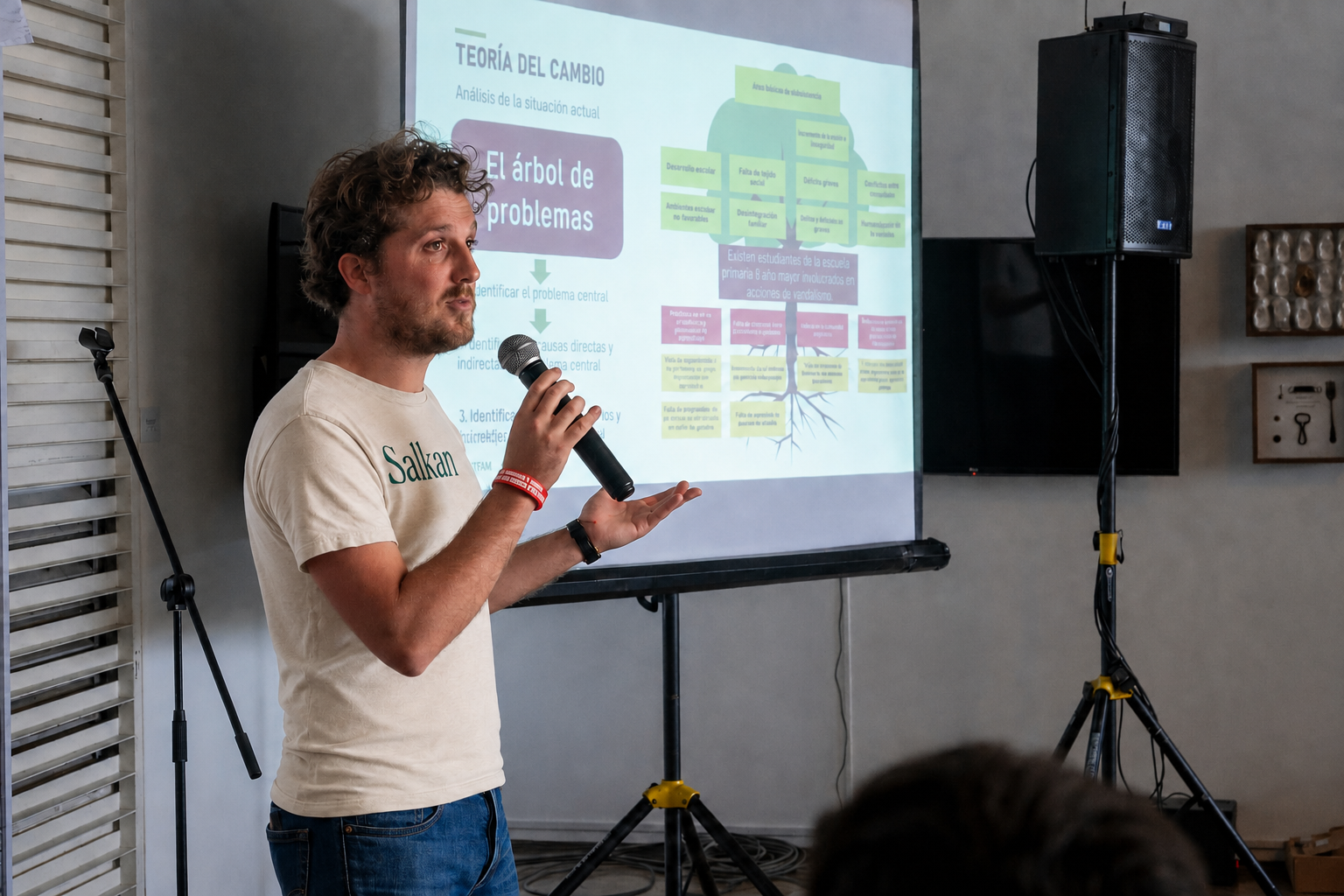
Theory of Change

Making the pathway from activities to long-term change explicit, including assumptions and the people affected.

02

Logical Framework

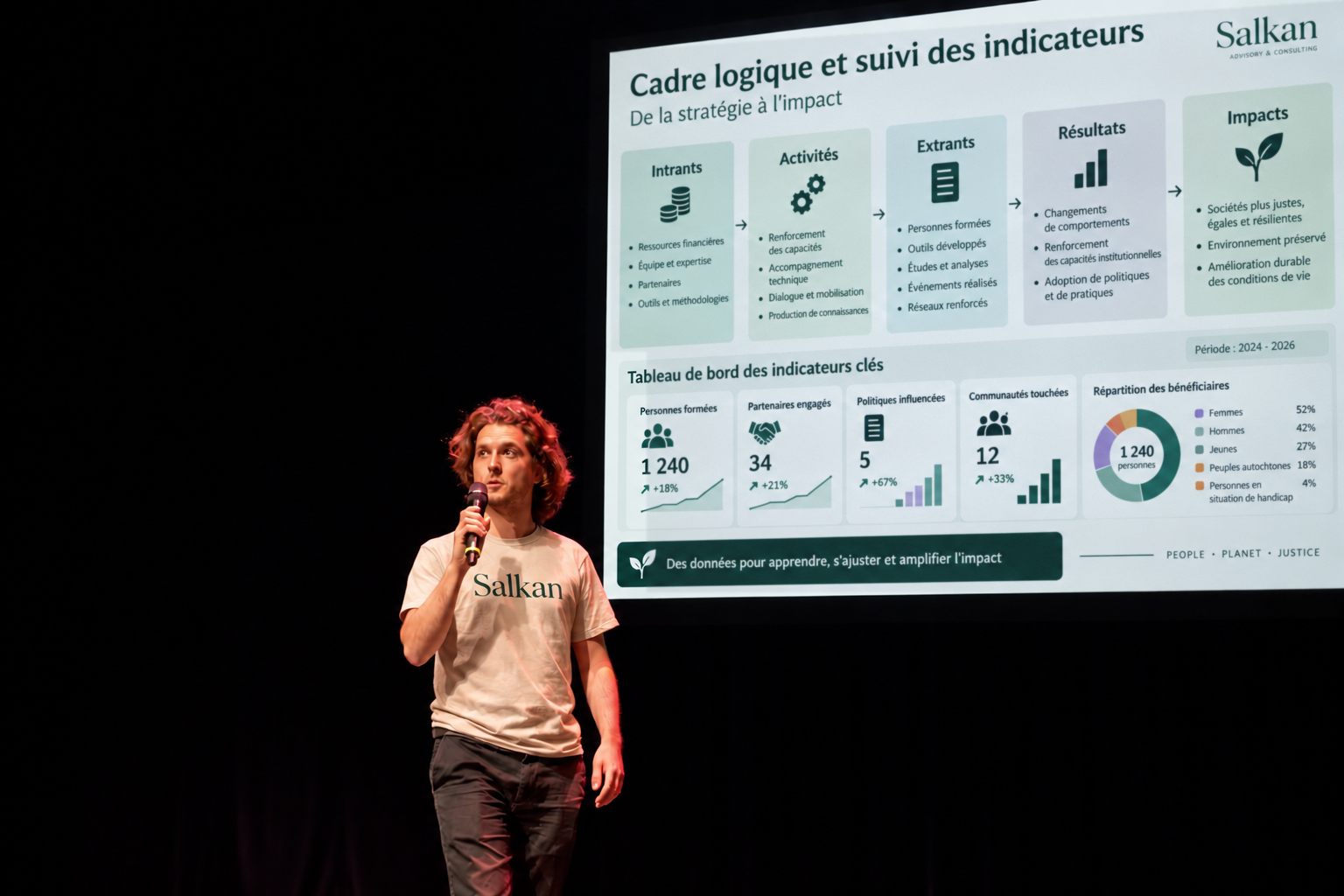
Illustrative example: strengthening community support services.

03

Monitoring Dashboard

Turning live programme data into a focused view of progress, variation and decisions.

People reached1,24883% of annual target
Outcome progress68%+12 points since baseline
Quarterly progressTarget: 80
Q1Q2Q3Q4

Across sectors, the essential questions are often the same.

Salkan works with organizations operating across both non-profit and for-profit sectors.

International development organizationsCivil society organizations & NGOsFoundations & programmesStartups & SMEsImpact-driven businessesIncubators & innovation programmesImpact-oriented investors & venture funds

Practical. Collaborative. Adapted to context.

  1. 01

    Understand

    Context, stakeholders, needs and existing systems.

  2. 02

    Design

    Strategies, methodologies, frameworks and tools.

  3. 03

    Implement

    Processes, systems and capacity strengthening.

  4. 04

    Learn

    Evidence, knowledge and opportunities for reflection.

  5. 05

    Adapt

    Learning translated into stronger decisions and action.

Power, voice and context matter. Salkan draws on approaches that are:

DecolonialFeministGender-responsiveInfluence and advocacy-orientedLocally ledIntersectional

Better tools. Better evidence. Responsible use.

Human judgement and artificial intelligence balanced by responsibility and safeguards

Digital technologies and artificial intelligence can strengthen monitoring, evaluation, learning and knowledge management when they provide genuine value.

Salkan brings careful attention to data protection, privacy, human oversight, bias and limitations. Technology should strengthen professional judgement, not replace it.

Bridging international development, entrepreneurship and technology.

Xavier de Briey
Xavier de Briey Founder, Salkan

Certifications

  • MEAL DPro FoundationPM4NGOs · 2025
  • Program DPro FoundationPM4NGOs · 2024
  • Project DPro Foundation (PMD Pro)PM4NGOs · 2023

Salkan is an independent advisory and consulting practice specializing in MEAL and impact management. It was founded by Xavier de Briey, an engineer, entrepreneur and impact management professional whose career has developed across technology, innovation and international development.

In 2016, Xavier co‑founded Nectar Technologies, a Canadian agri‑tech company that develops tools to help commercial beekeepers improve hive health and protect the pollinated food supply. As CTO, he led the company’s product and technology development.

In 2021, Xavier moved into the development aid sector, contributing to programmes led by several NGOs, including Oxfam. His work has spanned agroecology, education, climate adaptation and mitigation, social and economic justice, and active citizenship, with a focus on MEAL, project and programme management, organizational learning and knowledge management.

Xavier’s work connects practices that are often kept apart. He brings the performance, project management and operational disciplines developed in the for-profit sector to non-profit organizations, while helping businesses embed the development sector’s focus on wellbeing, accountability and impact into their core strategy and decision-making.

Building something with an impact ambition?

Salkan can help you clarify the change you want to create, build the systems needed to understand it and turn evidence into better decisions.

LinkedIn↗